Burke’s Final Customer
In Edinburgh, a profitable sale of a naturally deceased lodger’s body preceded the murders of 1828, an immunity bargain, and the public dissection of William Burke himself.[6]
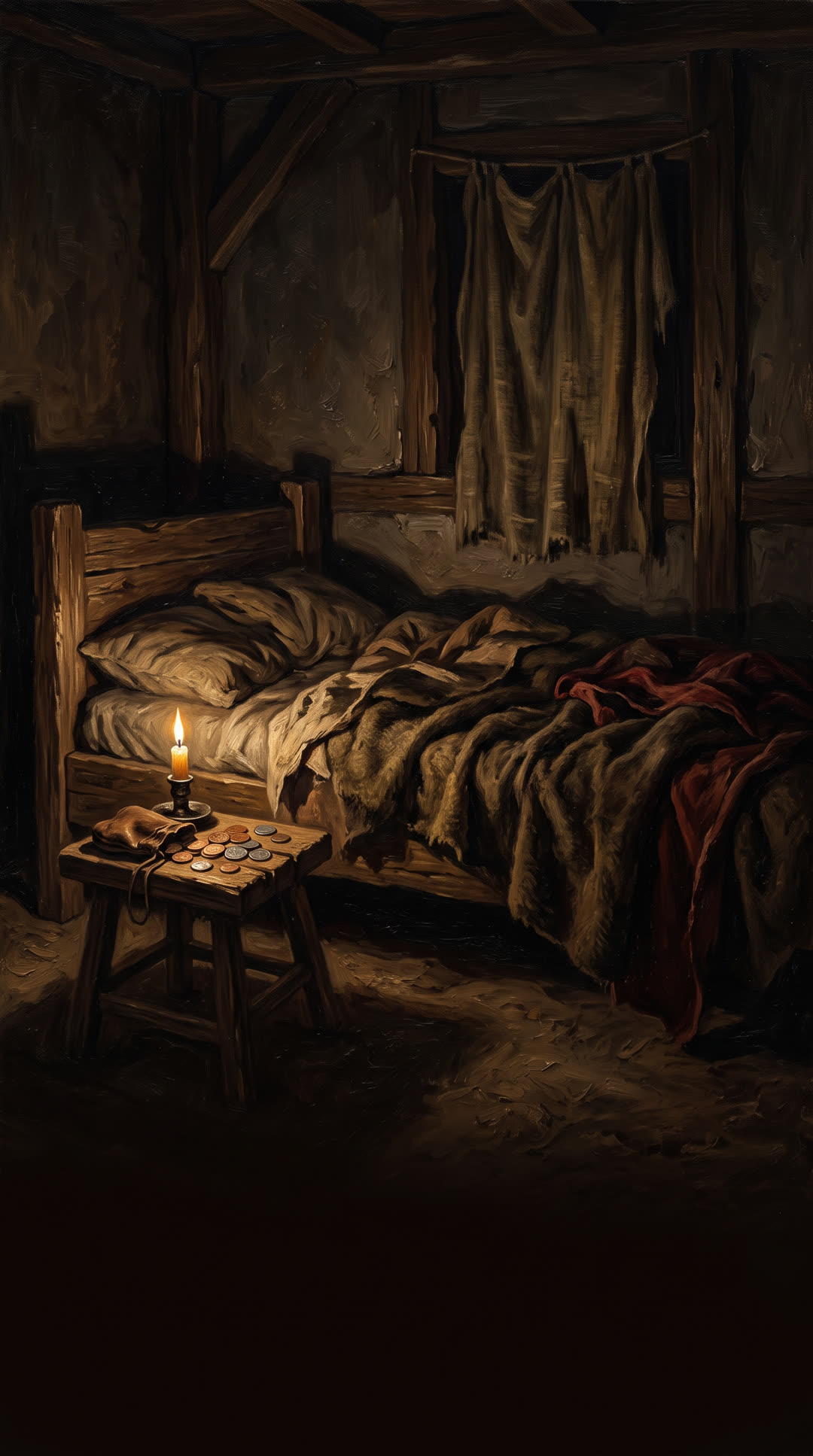
The first body was not a murder victim. On 27 November 1827, a man lodging with William Hare died of natural causes while owing rent; Hare enlisted William Burke to help recover the debt by selling the corpse to an anatomist.6 Before their partnership became a sequence of killings, it began with this transaction: a dead tenant’s body offered as a means of settling what he could no longer pay.6
Their destination was not initially Robert Knox’s establishment. Burke and Hare intended to approach another anatomist at the University of Edinburgh, but one of Knox’s students offered them more money and directed them to his rooms in Surgeons’ Square.6 The route to the dissecting table was therefore shaped by a competing offer, and the two men learned that a corpse could bring a substantial return.6
Knox ran an anatomy school that bought bodies for teaching, and Burke and Hare would become its suppliers.46 Their later crimes were associated with lodgings in Edinburgh’s Old Town, where potential victims could be offered accommodation and drink before their bodies were delivered to Knox or his assistants.6 The November sale established the opportunity; the decision to murder transformed that opportunity into a deliberate means of obtaining further bodies.46
During approximately ten months in 1828, Burke and Hare committed the sixteen murders conventionally associated with their names, selling the victims’ bodies to Robert Knox for dissection at his anatomy lectures.5 The National Library of Scotland places the beginning of the killings in January or February and their end on 31 October.6 The naturally deceased lodger sold the previous November belongs to the history of the partnership, but not to its murder count.6
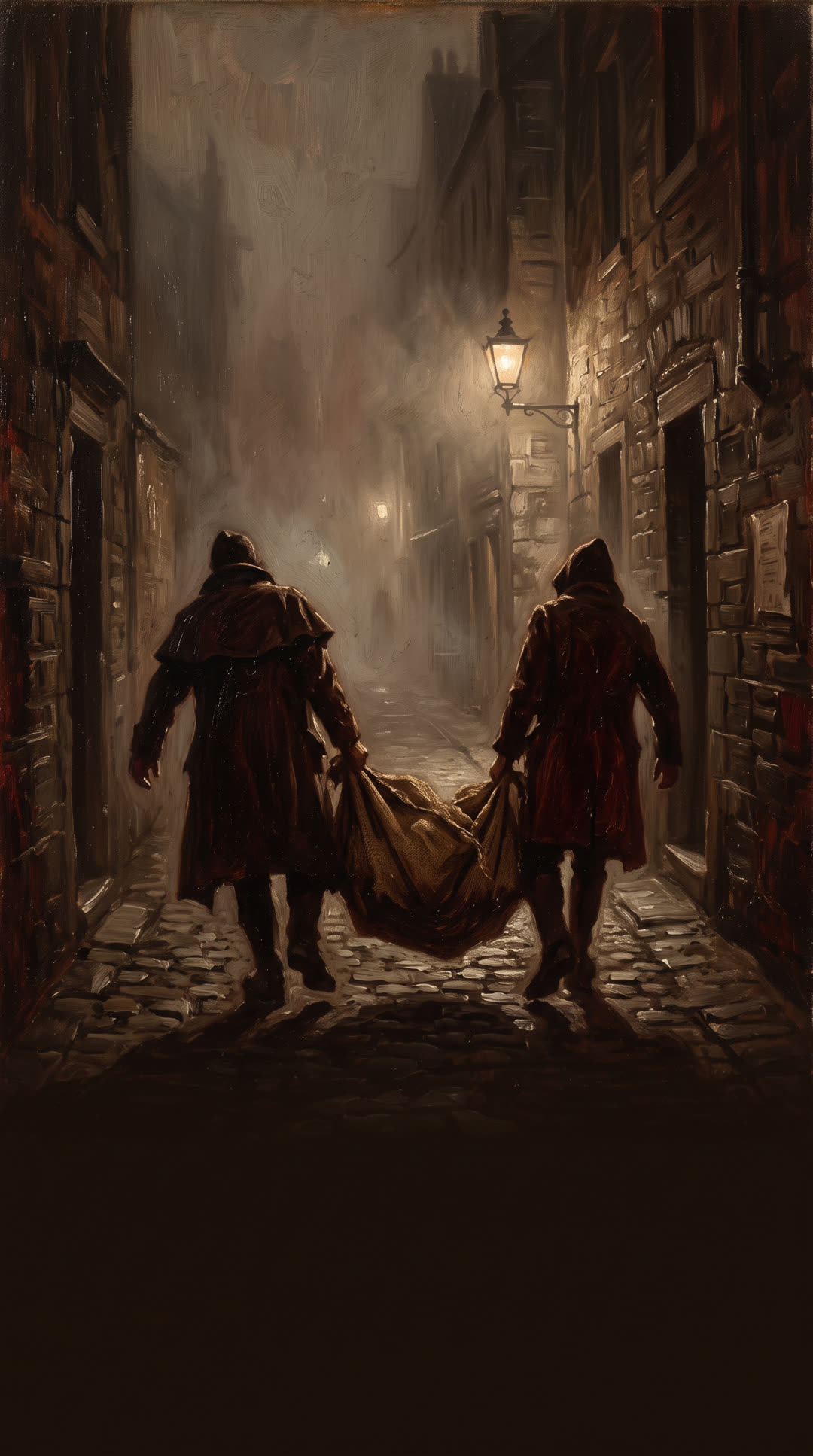
The method connected the killing to the intended sale. According to the National Library’s account, victims were plied with drink until unconscious and then suffocated, leaving no visible wounds.6 Burke and Hare subsequently carried the bodies to Knox’s establishment, where Knox or his assistants purchased them.6 Anatomy teaching supplied the market; the men supplied corpses by killing people rather than waiting for deaths to occur.46
Most victims were poor local women, although the murdered included men as well.6 Three names became especially prominent in the prosecution: Mary Paterson, James Wilson, and Margaret Docherty.6 Their names matter because the commercial sequence can otherwise reduce the victims to deliveries and payments. The charges concerned the deaths of identifiable people, and Burke’s eventual conviction was specifically for the murder of Docherty, the last person killed.26
Money was the immediate incentive. Burke and Hare recognised the income available from supplying anatomy teaching and began killing to obtain bodies.4 Their victims were often approached with offers of accommodation, and Burke, described by the National Library as the more presentable of the pair, frequently did the luring.6 Shelter and drink could serve as the invitation that brought a person within reach of the killers.6
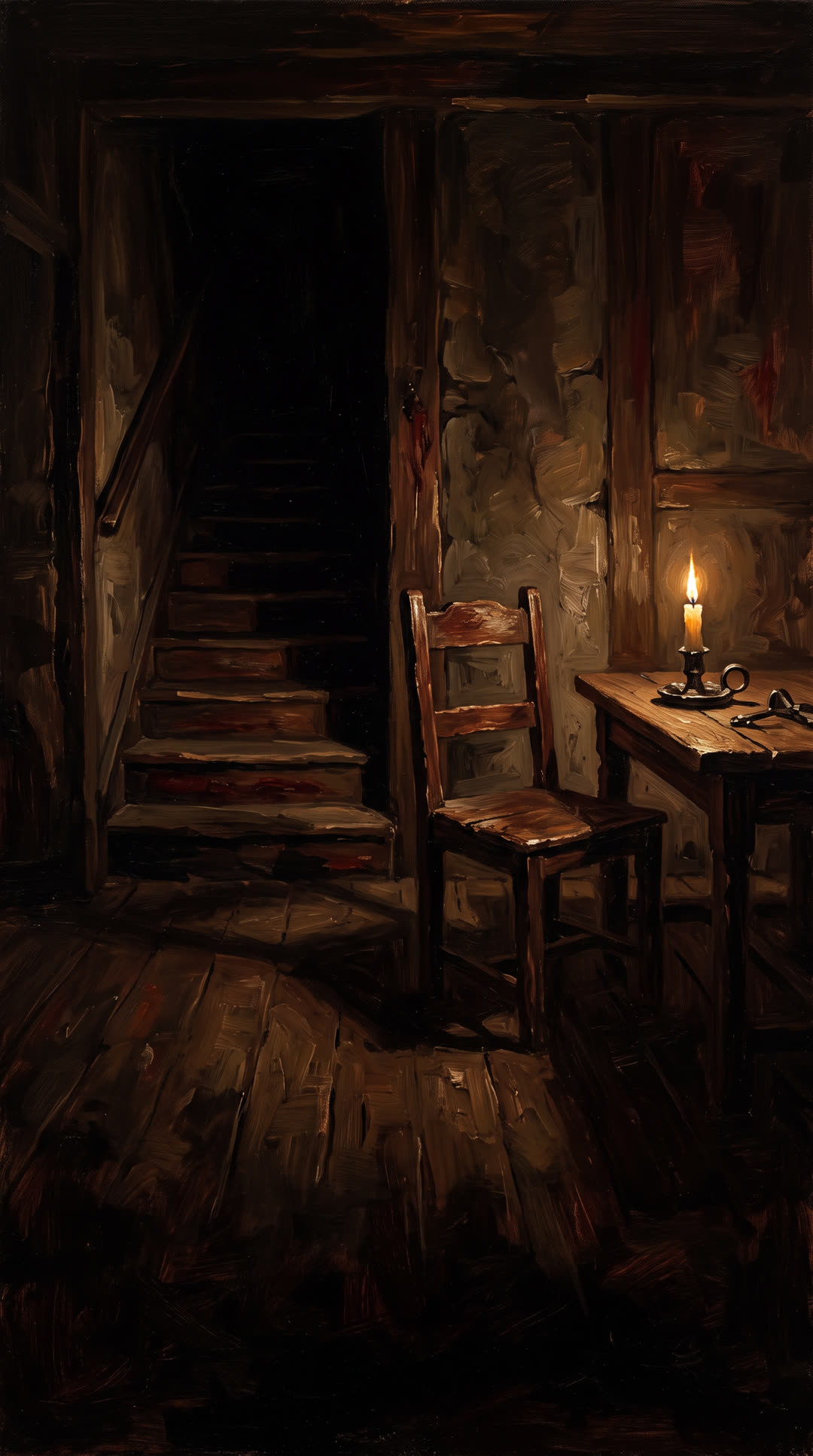
On 31 October 1828, Burke brought Margaret Docherty, a middle-aged Irishwoman, into the Broggan lodging house.5 He claimed that his mother was also a Docherty from the same part of Ireland, and they began drinking.5 Two other lodgers, Ann and James Gray, were paid to spend the night at Hare’s accommodation, with Docherty presented as a relative who had come to stay.5
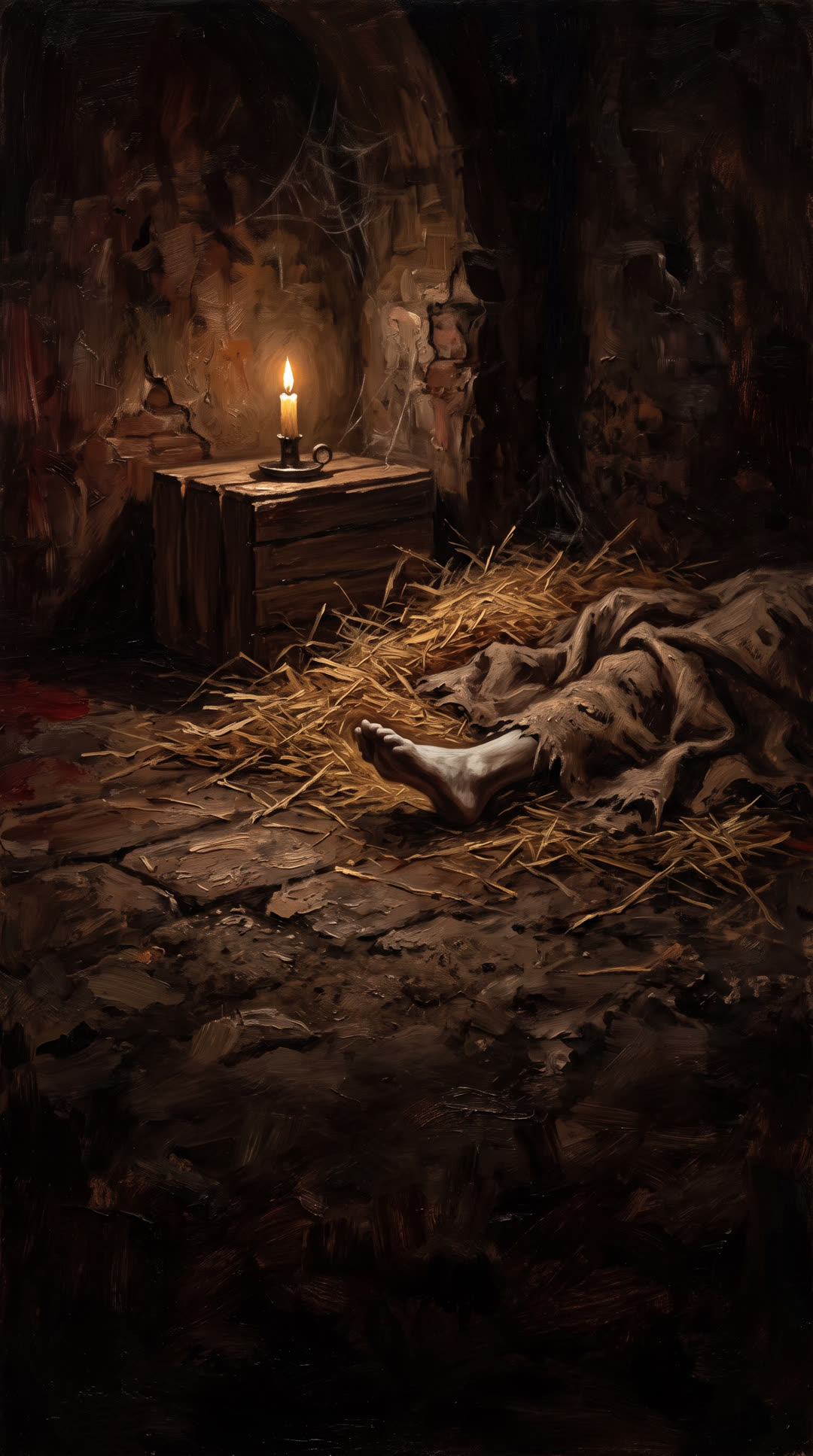
The preparations for the final murder involved more than an available room: Docherty was drawn in through an asserted family connection, drink was provided, and the Grays were induced to sleep elsewhere.5 Burke and Hare killed her that night and concealed her body beneath straw near the bed.5 Hospitality had brought her indoors; the temporary removal of the other lodgers gave the men an opportunity to kill her away from their observation.25
The Grays returned the following day, 1 November. Ann wanted to retrieve stockings she had left near the bed, but Burke prevented her from approaching it.5 His refusal made her suspicious.25 When the couple were alone in the house, they searched and found Docherty’s body hidden beneath straw.25 The discovery was made by the lodgers themselves, before the police arrived.6
Ann and James went to report what they had found. During their absence, Burke and Hare removed the body and delivered it to Knox’s establishment.26 The police therefore did not arrive to discover Docherty still concealed in the straw; the corpse had already been carried to the place where the killers expected it to be purchased for dissection.26 James Gray subsequently identified her at Knox’s dissecting rooms.2
Burke and his partner, Helen McDougal, also known as Nelly, gave differing accounts when questioned, increasing the authorities’ suspicion.6 The investigation extended to Hare and his wife, Margaret, with all four detained by early November.6 The exposure depended on a sequence of connected evidence: the Grays’ discovery, their report, the inconsistent accounts, and the recovery of Docherty’s body from the anatomy establishment.26
The prosecution then separated the accomplices’ interests. Lord Advocate Sir William Rae chose Hare as the accused from whom to obtain evidence against the others.6 Hare turned King’s evidence, receiving immunity in exchange for information that could be used to prosecute Burke and McDougal.6 Margaret Hare was also exempted from prosecution.6 The arrangement made one of the killers a witness rather than a defendant facing punishment for the murders.6
Burke and McDougal’s trial began on Christmas Eve 1828 and continued without a break until the jury returned its verdict on Christmas morning, just under twenty-four hours later.6 Burke was convicted of Docherty’s murder.2 The charge against McDougal was found not proven, and she was released.26 Burke’s sentence went beyond execution: his body was also to undergo public dissection.2
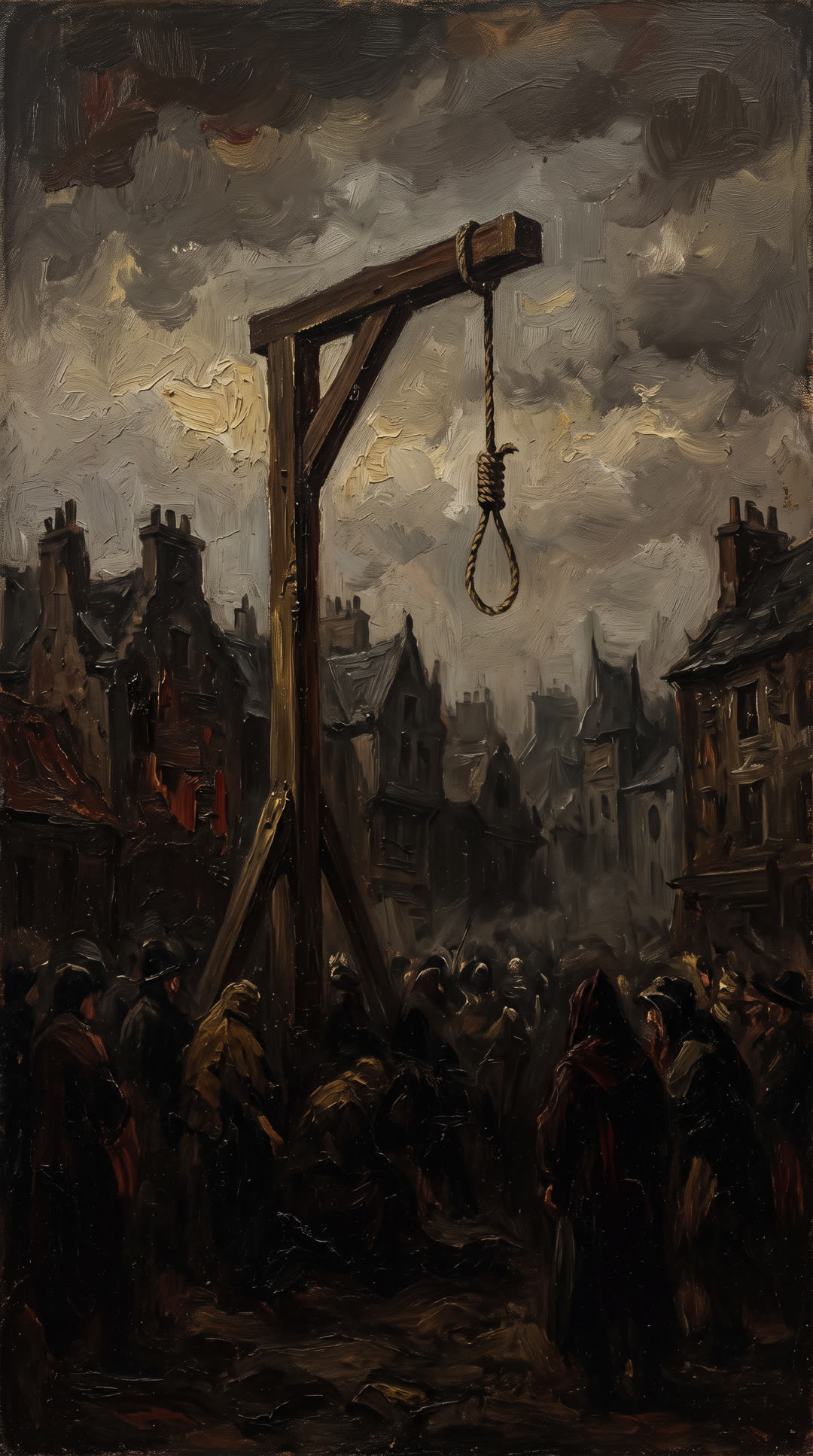
On 28 January 1829, Burke was publicly hanged in Edinburgh’s Lawnmarket.6 A large crowd witnessed the execution; Sir Walter Scott watched from a window.6 Hare’s evidence had helped bring Burke to this end, while the immunity agreement spared Hare prosecution.6 Their partnership in supplying bodies had ended with radically different legal outcomes: one man protected by the bargain he had accepted, the other condemned to death and the anatomist’s table.26
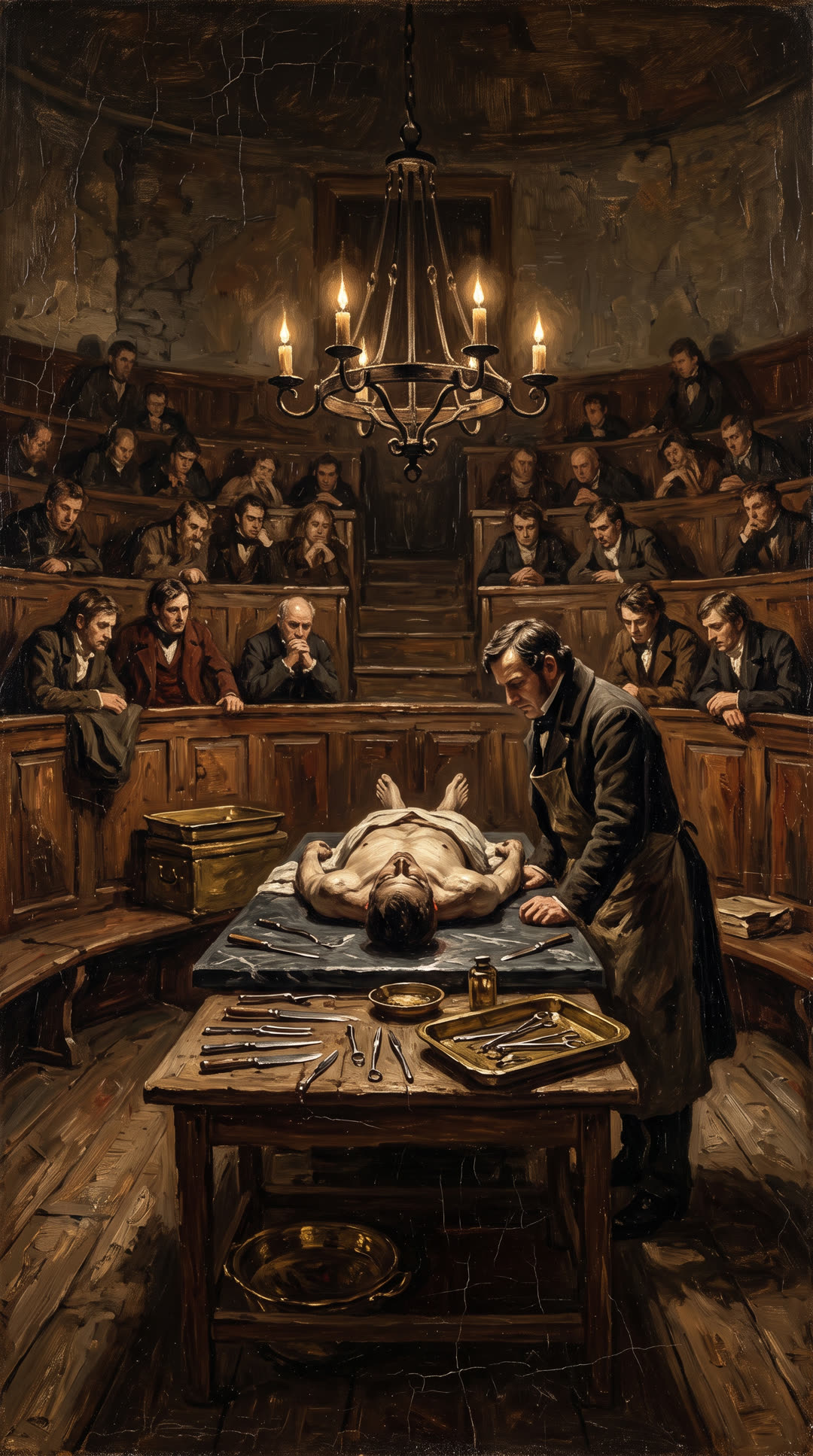
After the execution, Burke’s body was publicly dissected by Alexander Monro, the university anatomy professor.25 The man whose victims had been sold for anatomy teaching became a subject of dissection himself.26 This was part of the punishment imposed by the court: Burke’s sentence expressly required public dissection after death.2 The route by which his corpse reached the anatomist was therefore a judicial sentence, rather than the commercial arrangement through which he had supplied his victims.26
The sentence also looked beyond the immediate procedure. In the judicial words reproduced in the detailed account, Burke’s body was to be “publicly dissected and anatomized,” and the judge expressed the hope that his skeleton would be preserved so that posterity would remember his crimes.5 Preservation was explicitly imagined as a way of carrying remembrance of the punishment beyond the scaffold and the dissection room.5
Burke’s body was dissected and put on display, and his skeleton is now kept at the University of Edinburgh’s Anatomy Museum.6 The surviving remains give the story’s final reversal a material form: the corpse seller became an anatomical specimen.6 The institution holding his skeleton preserves the remains of the convicted murderer, while the surviving prosecution history records the names of Paterson, Wilson, and Docherty among those whose bodies his partnership supplied.6
The dates divide the story into three distinct stages. A naturally deceased lodger’s body was sold in November 1827; the murders took place in 1828; Burke’s hanging and subsequent dissection followed in 1829.56 Calling them the Burke and Hare murders of 1828 identifies the principal killing period, but the judicial conclusion belongs to the following year.56
The final victim also connects the private crime to its public exposure. Docherty was killed after being brought into Burke’s accommodation, discovered by returning lodgers, and then located at the establishment that had bought the bodies.256 Her murder became the basis of Burke’s conviction.2 The sequence runs from an invitation indoors to a concealed body, from the Grays’ search to the police investigation, and from the dissecting rooms to the courtroom.26
At the beginning, Burke and Hare learned that they could obtain money from a corpse; at the end, Burke’s own remains were subjected to dissection under sentence of law.26 Between those events lay sixteen murders committed for the anatomical market.5 The closing image of Burke as a specimen is grounded in that punishment, but the story’s decisive discovery belongs to Ann and James Gray, who found Docherty beneath the straw and went to the police.26
What we know vs. legend
What we know vs. legend: Burke and Hare sold a naturally deceased lodger and then murdered people to obtain bodies; the familiar grave-robber image does not describe the supply method documented in this sequence.46
What we know vs. legend: Knox and his assistants bought the bodies, but those purchases do not establish the claim that Knox ordered the murders; the supplied institutional account documents buying, not a murder-for-hire agreement.6
What we know vs. legend: “Burke’s Final Customer” is a metaphor. Knox’s establishment bought the victims’ bodies, whereas Alexander Monro dissected Burke under a sentence requiring public dissection, not through another documented commercial sale.26
Sources
- 1. The Edinburgh Murders: Burke and Hare - History Hit — access.historyhit.com
- 2. Burke and Hare: The Edinburgh killers who sold their victim's bodies for dissection | Sky HISTORY TV Channel — history.co.uk
- 3. Anatomy and crime - Burke and Hare: The body snatchers — bbc.co.uk
- 4. Burke and Hare — medicine-vet-medicine.ed.ac.uk
- 5. Burke and Hare murders — en.wikipedia.org
- 6. From crime to collection: Burke and Hare at the Library — nls.uk
- 7. The Anatomy Murders - William Burke and William Hare - Video | YouLibs.com — youlibs.com
Images and narration are AI-generated; the story is researched from the sources above. How we work