The Summer Strasbourg Could Not Stop Dancing
In the hot, hungry summer of 1518, a single woman stepped into a Strasbourg street and began a dance that would seize dozens, then possibly hundreds, before the city's rulers carried the afflicted to a mountain shrine and the strangest epidemic of the age burned itself out.
Strasbourg in the summer of 1518 was a free imperial city of the Holy Roman Empire, a prosperous Rhineland town that today sits in the French region of Alsace 2. It had not been a kind decade. Scholars describe the dancing plague as one of a series of "calamitous events" to befall the city's residents in the early sixteenth century: floods, unusually extreme temperatures, bubonic plague, and three years of famine that killed many through malnutrition and prompted peasant uprisings 3. Even the sky seemed hostile; strange heavenly portents such as the comet of 1492 had fed apocalyptic expectations and civil unrest 3. Smallpox and syphilis circulated alongside the hunger 2. And the summer of 1518 itself was extraordinarily hot 3.
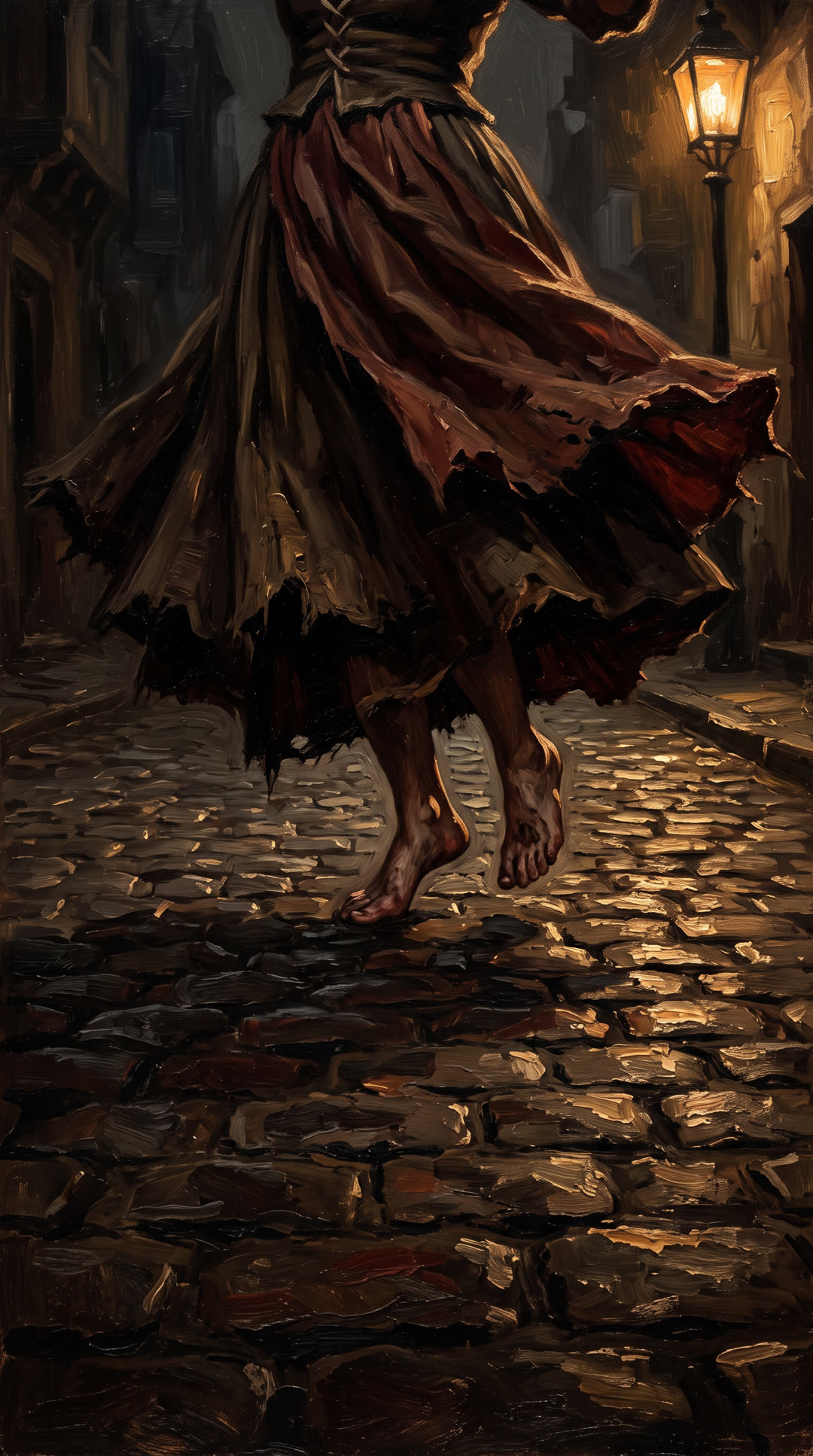
Into that heat, in mid-July, a woman stepped out of her house and began to dance. The earliest connected account of what followed was written in the 1530s by the irascible but brilliant physician Paracelsus, who says only that the dancing plague began in mid-July 1518 when a lone woman stepped outside her house and jigged for several days on end 4. Later writers give her a name, Frau Troffea (or Trauffea), and many fix the date at 14 July, although the exact day rests on later tradition rather than on Paracelsus 235. National Geographic pictures her on the narrow cobbled street outside her half-timbered home, reportedly seized by spasmodic, convulsive movement and dancing all day until she collapsed 3.
What made the scene frightening rather than merely odd was that she did not stop. Her husband begged her to, but the next day she began dancing again on swollen, bloody feet 3. She kept this up for days, pausing only to sleep before resuming 6. Britannica records that she seemed unable to stop, danced until she collapsed from exhaustion, rested, and then returned to the compulsive, frenzied activity 2. Within a week, more than 30 other people were similarly afflicted 23. Whatever had taken hold of Frau Troffea was no longer hers alone.
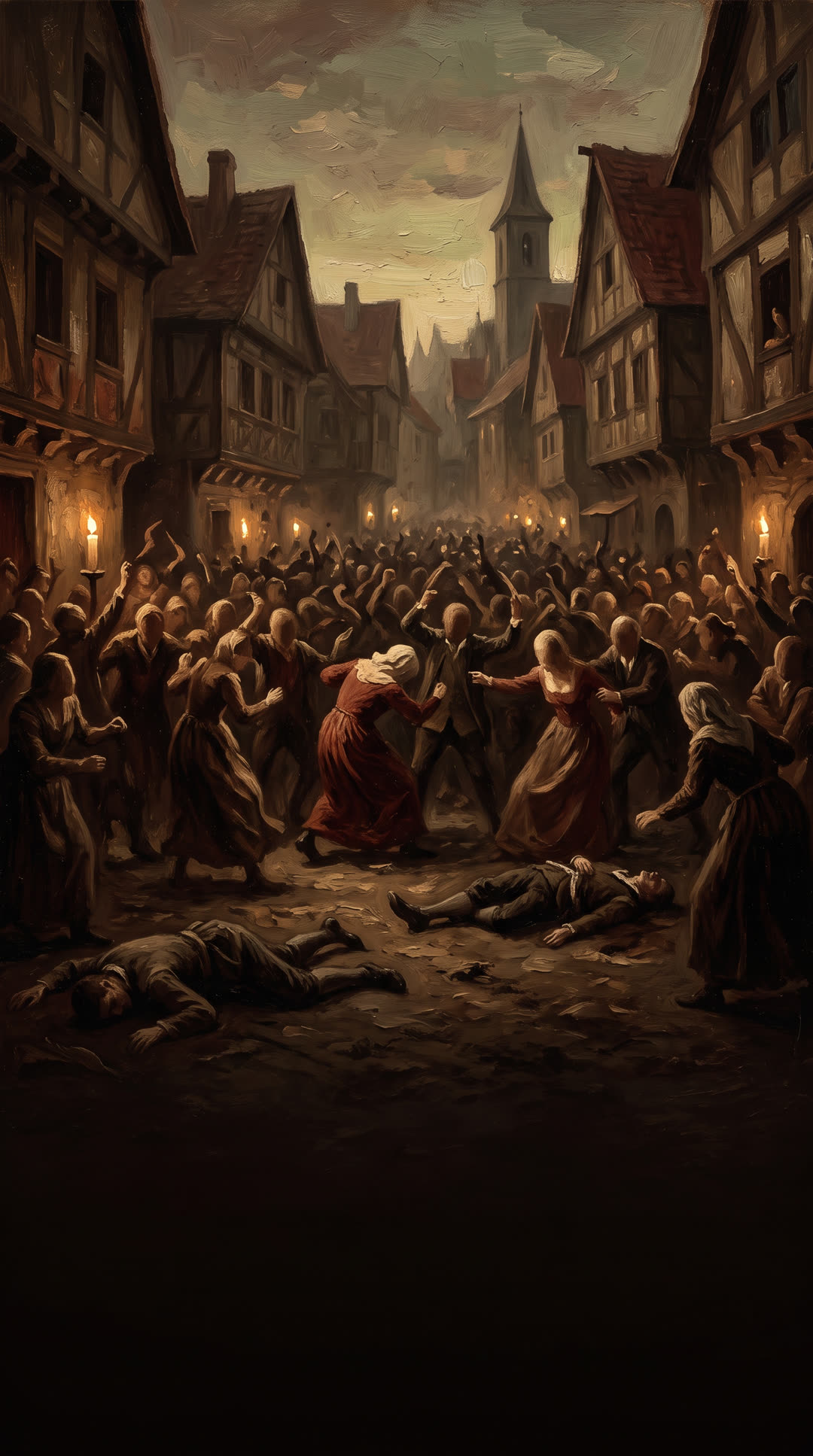
The dancing spread through the city over the following weeks. By August, the chronicles put the number of afflicted at somewhere between 50 and 400, a range that reflects real disagreement among the surviving sources 6. The higher figure is the one that has stuck: Britannica says as many as 400 people were eventually consumed by the dancing compulsion, and National Geographic writes that within a month the mob was 400 strong 23. The lower estimates deserve equal weight. What is secure is that the numbers kept rising and that the city authorities were alarmed by the ever-increasing crowd of dancers 2.
The dancers kept going long past the point of injury 2. Observers were clear that they did not want to be dancing 4; Britannica describes the movement as uncontrollable and apparently unwilling, sustained for days on end 2. A poem preserved in the Strasbourg city archives describes the result bluntly: "In their madness people kept up their dancing until they fell unconscious and many died" 4. Britannica likewise states that a number of them died from their exertions 2.
How many died, and of what, is far less certain. Popular retellings say dancers collapsed from sheer exhaustion and that some died from strokes and heart attacks 1. National Geographic notes that some accounts reported several dancers dying each day of heart attacks, exhaustion or starvation 3. Those causes are later inferences layered onto the chronicle's spare "many died"; no contemporary source offers a diagnosis, and no secure daily toll survives. The honest version of the scene is this: by August, scores and perhaps hundreds of people were dancing against their will in the streets of Strasbourg, and some of them did not survive it 246.
Confronted with chaos, the men who governed Strasbourg reached first for medicine. The city's privy council consulted the physicians' guild 7. Among the councillors was the writer Sebastian Brant, whose moralising bestseller Ship of Fools devoted a chapter to the folly of dance; he and his fellow burghers were mystified by the scenes in the streets 4. The doctors, in keeping with the standard medical wisdom of the day, declared the dancing to be the result of "overheated blood" on the brain 47.
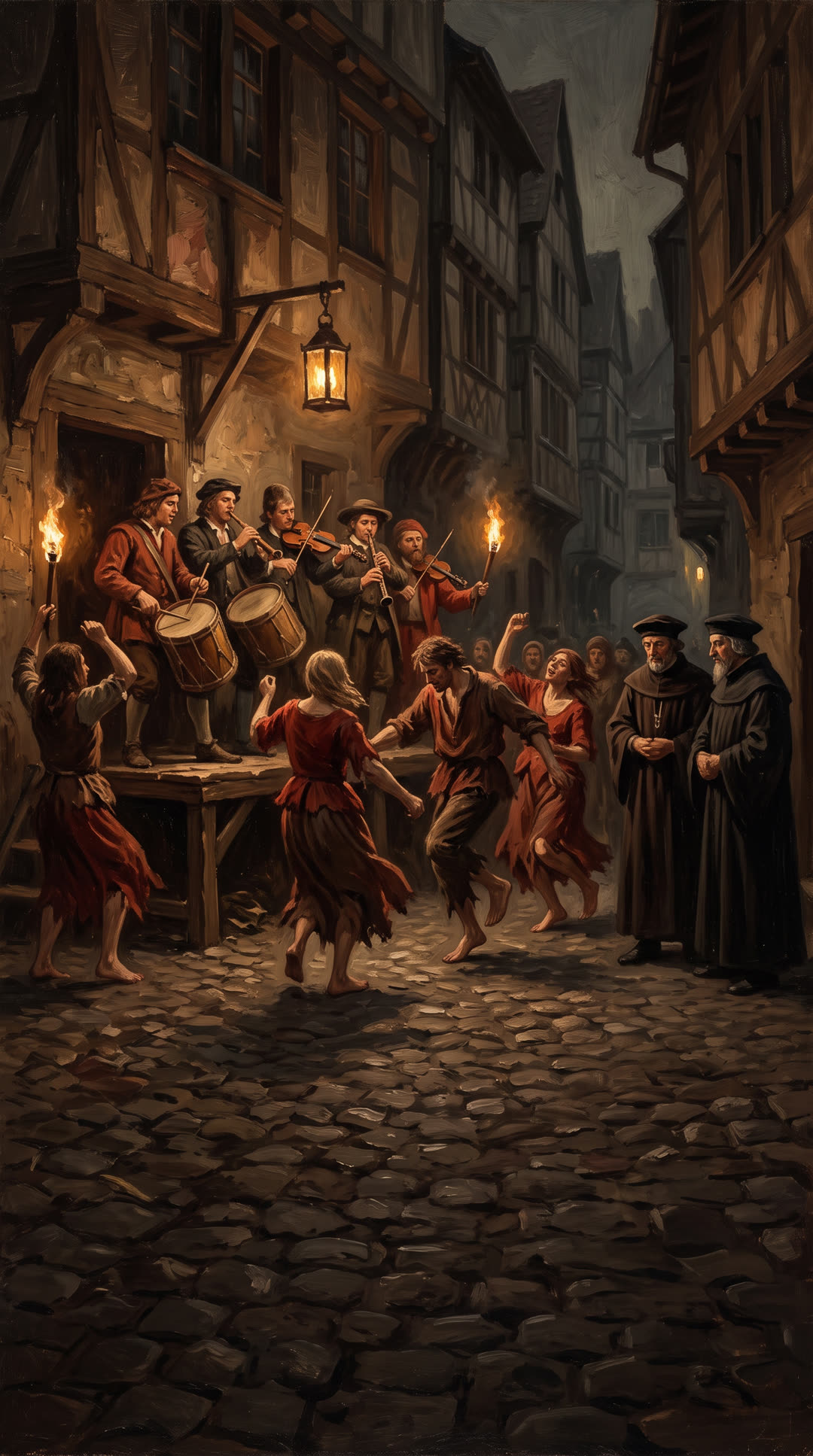
The remedy followed from the diagnosis. If hot blood was the cause, the afflicted should dance it out, sweating away the residues of burnt blood until they recovered their minds 7. It is worth being precise about who did what: the physicians supplied the theory, but it was the council that designed and paid for the treatment 47. The councillors ordered the clearing of an open-air grain market, commandeered guild halls, and erected a stage next to the horse fair, escorting the dancers to these places in the belief that frantic motion would shake off the sickness 4. They hired pipers and drummers and paid "strong men" to keep the afflicted upright by clutching their bodies as they whirled and swayed 4. The WRNC account adds that musicians played day and night and that salaried dancers were employed to ensure the afflicted never stopped moving 7; Britannica confirms that professional dancers were brought in to help the sick keep dancing 2.
The result, in the grain market and beside the horse fair under the full glare of the summer sun, was a scene that the historian John Waller compares to something imagined by Hieronymus Bosch 4. And it failed. Placing the dancers on a makeshift stage in the centre of the city, for all of Strasbourg to see, meant the dancing attracted more dancers; the council was surprised to discover that the dancing was contagious and that the cure had intensified the problem 7. Britannica puts it the same way: the organised dancing only exacerbated the contagion 2. The council sensed it had made a mistake 4.
So the authorities reversed course. Deciding that the dancers were suffering from holy wrath rather than sizzling brains, the council opted for a period of enforced penance and banned music and dancing in public 4. Most people in the city believed that St. Vitus had cursed them and that sin, corruption and hedonism were to blame, so the council shut the gambling houses and brothels and organised masses at the cathedral to pray for the afflicted 7. St. Vitus, patron saint of epileptics and of dancers, was believed locally to punish those who failed to propitiate him by forcing them to dance 2.
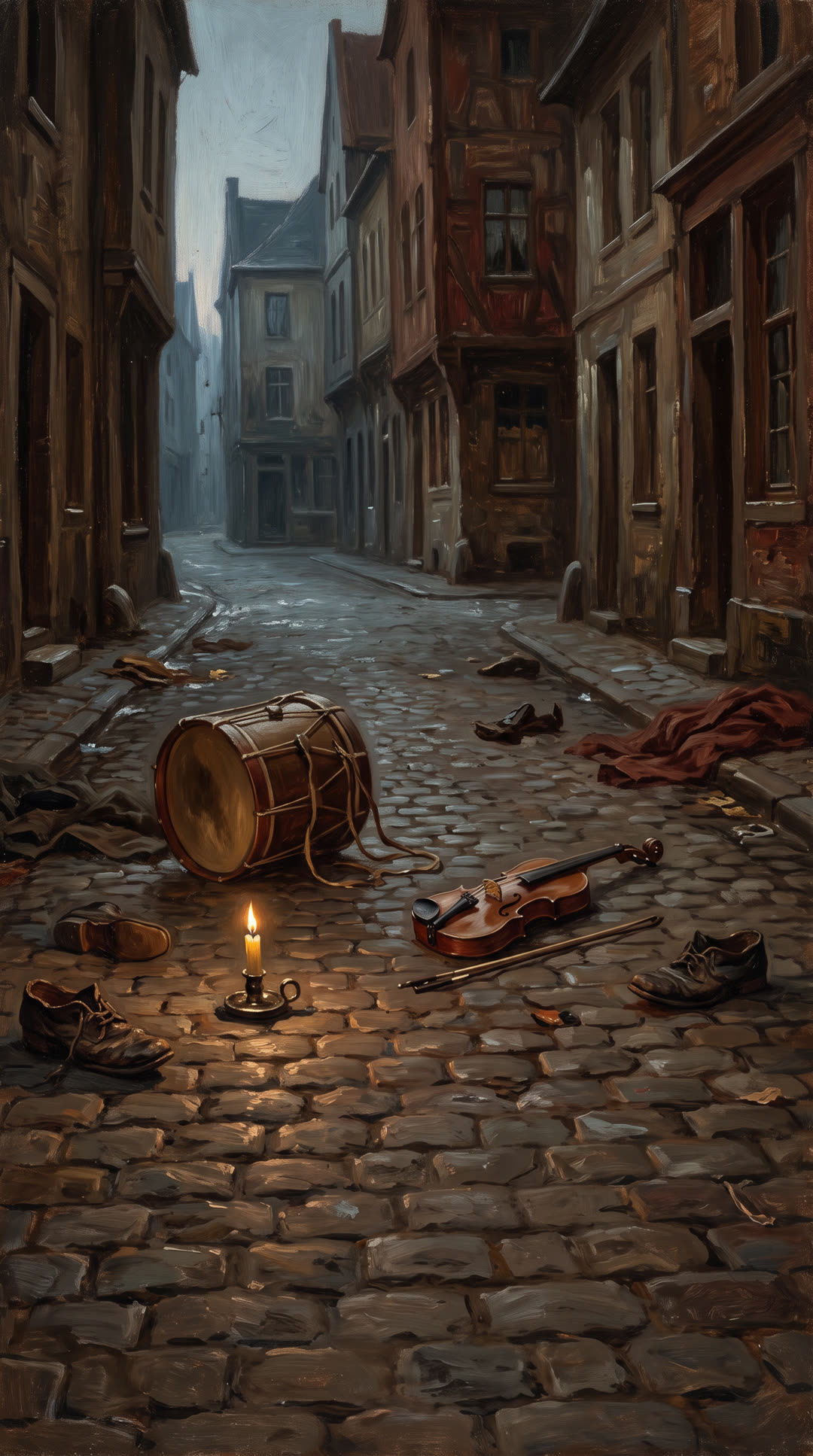
Then came the pilgrimage. A shrine to the saint lay a day's ride away in the hills above Saverne, in the Vosges mountains; the dancers were placed in wagons, still dancing, and sent up the mountain, where priests conducted religious ceremonies and prayed to release them from the curse 7. The chronicles, as summarised by Waller, describe a musty grotto where the dancers' bloodied feet were placed into red shoes and they were led around a wooden figurine of the saint 4. In the following weeks, most ceased their wild movements 4. On the precise ending the sources differ by a couple of weeks: WRNC says the dancing had ceased by the end of August, while Britannica says the mania began to abate in early September, and National Geographic and History place the journey to the shrine and the recovery in September 7231. Either way, the episode lasted roughly two months 2.
Did it "simply stop"? Britannica's summary says the mania ended "as mysteriously as it began" 2, and in the sense that no cause has been proven, that is fair. But the ending coincided with deliberate interventions: the ban on public music and dancing, the penitential measures, and the organised pilgrimage 47. The dancers did not vanish on their own; they were carried away and, by the account of the chronicles, apparently cured 34.
Nor is it true that no one has ever explained it. Contemporaries blamed demonic possession or overheated blood 2. Twentieth-century investigators proposed ergotism, poisoning from rye contaminated with a mould that produces a chemical related to LSD; it can bring on terrifying hallucinations and violent twitching, but it is very unlikely that sufferers could have danced for days, and the theory is now widely doubted 42. The sociologist Robert Bartholomew argued the dancers were adherents of heretical sects dancing to attract divine favour, but observers were clear that they did not want to be dancing 24. Encephalitis, epilepsy and typhus can cause temporary erratic movements, though nothing that could be described as uncontrollable dancing 3. The most widely accepted explanation, laid out by the medical historian John Waller and rooted in scholarship from the 1980s, is mass psychogenic illness, what used to be called mass hysteria: under the extreme stress of famine and disease, and with the St. Vitus curse ready to hand as a local fear, the outbreak took its form from belief and spread through the city 243. Recent scholars have refined the picture; Kathryn Dickason reads the dancing as a collective mourning response to upheaval, while Lynneth Renberg stresses ritualised religious behaviour 3. None of this is definitive, and historians still debate the details 3. But the Dancing Plague of 1518 is less an unexplained mystery than a well-documented catastrophe whose most probable cause we can name 24.
What we know vs. legend
"Four hundred dancers": what we know is that the chronicles disagree, giving a range of 50 to 400 afflicted by August, and that 400 is the ceiling reported by one tradition 62. The legend is the firm, round figure of 400 repeated as settled fact 3.
"They danced until their hearts gave out" and "fifteen died a day": what we know is that a poem in the city archives says "many died" and that Britannica records a number of deaths from exertion 42. The legend is the specific daily toll and the precise causes of death, such as strokes and heart attacks, which appear in popular retellings but are inferences, not contemporary medical findings 13.
Frau Troffea and 14 July: what we know is that the earliest narrative, by Paracelsus in the 1530s, says only that a lone woman began dancing in mid-July 1518 4. The name Troffea or Trauffea and the exact date of 14 July come through later and secondary accounts 235; her later fate is not recorded in any source cited here.
"Doctors prescribed more dancing": what we know is that the physicians' guild diagnosed overheated blood, while the city council devised, organised and paid for the stages, musicians, strong men and professional dancers 74. The legend compresses the two into a single medical prescription.
"It stopped as mysteriously as it began": what we know is that the ending coincided with the council's ban on public music and dancing, penitential measures, and the organised pilgrimage to the St. Vitus shrine at Saverne 47. The legend is that it simply vanished on its own 2.
"No one has ever explained it": what we know is that there is no definitive proof, but mass psychogenic illness, as argued by John Waller and rooted in 1980s scholarship, is the most widely accepted explanation among historians 243. The legend is total mystery.
Red shoes and the wooden figurine of St. Vitus: what we know is that these details come from the chronicles as summarised by Waller 4; they are vivid but rest on a single tradition and are not independently confirmed in the other sources here.
Frau Troffea's "joie de vivre": what we know is that observers consistently described the dancers as unwilling and unable to stop 24. The legend, found in lighter retellings, casts her first steps as cheerful or playful 5.
Sources
- 1. What Was the Dancing Plague of 1518? | HISTORY — history.com
- 2. Dancing plague of 1518 | Facts & Theories | Britannica — web.archive.org
- 3. What caused Strasbourg’s dancing plague of 1518? | National Geographic — nationalgeographic.com
- 4. Keep on moving: the bizarre dance epidemic of summer 1518 — amp.theguardian.com
- 5. The Dancing Plague of 1518: History's Oddest Epidemic — historynet.com
- 6. Dancing plague of 1518 — en.wikipedia.org
- 7. A City in Trance: Strasbourg’s 1518 Dancing Plague | WRNC — wrnc.eu
Images and narration are AI-generated; the story is researched from the sources above. How we work